Best AI Avatar Generator for Veterinarians: Top Picks 2026
The best AI avatar generator for veterinarians who need clinic intros and pet care explainers is Zoice, our top pick for turning one photo into a Host that speaks your script. Upload a clear photo of the vet or a clinic pet, paste a welcome or a general aftercare explainer, and Zoice lip syncs every word so the same presenter can return in the next video.
We compared four tools on what a clinic actually needs: a start from one still photo, a mouth that follows the words, control over the script, and a price you can confirm on the tool's own site. Zoice comes first, and each tool after it earns a place for a different job. These videos are for introductions and general pet care information, not a substitute for a veterinarian's own advice, and every script should be reviewed by the clinic before it is published. For related formats, see our guide to patient education videos, our picks for the best AI talking mascot generator, and our list of the best AI talking pet generator tools.
What Is an AI Avatar Generator for Veterinarians?
An AI avatar generator for veterinarians turns a still photo into a presenter that can deliver a script on camera. The usual starting point is a clear portrait of the vet, or a photo of a clinic pet, plus the words you want spoken. The tool then builds a video in which the mouth follows those words, so a clinic can share a welcome, a first-visit overview or a general pet care explainer without booking a studio.
Clinics use the format for a new-client welcome, a short video that explains what a first visit usually looks like, and general tips that the clinic has already approved. The avatar is a presenter, and it should not be used to discuss a specific patient's care.
What to check before you pick a tool:
- Can one photo of the vet, or of a clinic pet, become the presenter without a studio shoot?
- Does the mouth follow a script the clinic wrote and reviewed, or do you have to supply a finished audio track?
- Can the same Host return in later videos, so the clinic stays recognizable?
- Is the starting price published on the tool's own site?
- Can the clinic review and approve every script before it is published?
For a closer look at presenter clones from a photo, see the overview of the AI clone video generator.
Quick Comparison: Best AI Avatar Generators for Veterinarians
| Tool | Best For | Photo only input | Lip sync | Gestures and expressions | Aspect ratios | Starting price | Rating |
|---|---|---|---|---|---|---|---|
| Zoice | Clinic intros, general pet care explainers and optional pet mascots from one photo and a script | Yes, one photo plus your script | Yes | Yes, with action prompts | Yes, set in the composer | Free plan, paid from $7.99/mo | 5.0/5 on Capterra (5 reviews) |
| HeyGen | Polished clinic presenters for website welcomes and explainers | A photo avatar or a stock avatar | Yes | Expressive presenters are listed on the official site | Not stated on the public homepage | Free plan, paid from $29/mo | Not listed |
| D-ID | Photo-based clinic presenters for clear spoken explainers | A photo plus a script or audio | Yes | Facial motion is listed for talking presenters | Not stated on the public homepage | Paid Lite plans from $4.70/mo when billed annually | Not listed |
| Elai.io | Learning-style pet care videos and training explainers | A photo or a stock avatar | Yes | Presenter motion is listed on the official site | Not stated on the public homepage | Free plan, paid from $29/mo | Not listed |
1. Zoice: Best AI Avatar Generator for Veterinarians Overall
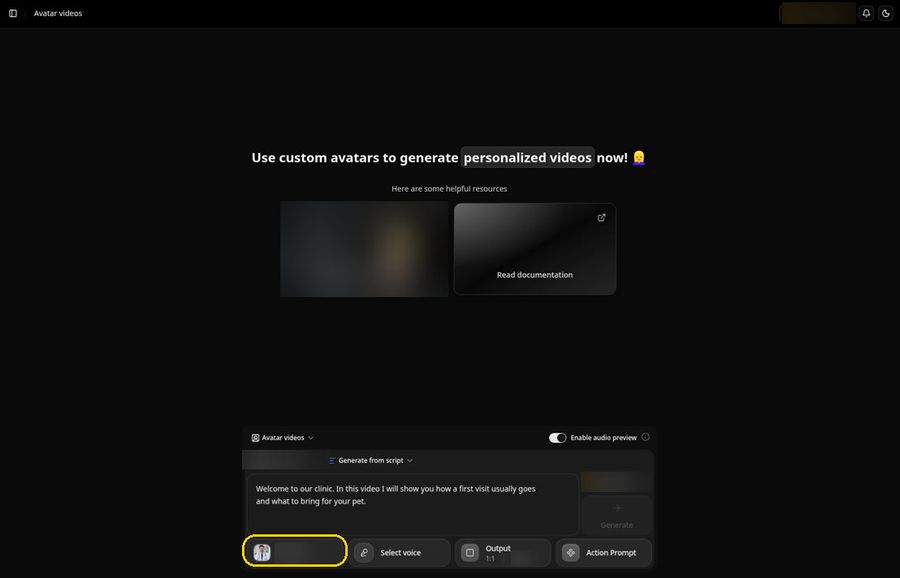
Zoice suits a clinic that already has a photo and a script for a welcome or a general explainer. One still image becomes a Host, your script becomes the lines, and the mouth is lip synced to those words. A veterinarian can introduce the clinic, or a clinic pet can appear as a mascot in a lighter reminder video. Keep every script to general information, have the clinic review it, and tell viewers that the presenter is an AI avatar.
Key Features
- One photo of the vet or a clinic pet becomes a Host that speaks your script, lip synced word by word
- Action prompts direct gestures, body motion and expressions, so a presenter or a pet mascot can nod, pause or look toward the camera
- Voice cloning from a short sample, with permission, so the vet's own voice can carry the series
- Voice import from a reference audio file if you already have narration you like
- 50+ voices and 170+ languages for clinics that serve more than one language community
- Aspect ratio options for a website embed, a waiting-room screen or a social post
Best For
- Veterinarians who want a clinic intro or a first-visit overview from their own photo
- Clinics that need general pet care explainers, reviewed before they are published
- Teams that want an optional talking pet mascot for lighter reminder clips
Pros of Zoice
- One photo is enough. You do not need a studio day to record a welcome or a general explainer.
- You control the words. The script is yours, so the clinic can review every line before it is published.
- The same Host can return. Save the presenter or the mascot and bring it back for the next video.
- You can try it first. A free plan and a paid Starter plan at $7.99 per month let you test a full clip before you commit.
Cons of Zoice
- Needs an internet connection
- Smaller public avatar library
Rating
5.0/5 on Capterra (5 reviews).
Pricing
Zoice has a free plan. Paid plans start at $7.99 per month on the Starter plan, with further paid tiers listed on the Zoice pricing page. Plans can change, and that page always has the latest list.
When to Use It
- You have a clear photo and a clinic-reviewed script for an intro or a general pet care explainer
- You want the same Host to return in later videos
- You would rather write the line than record a separate audio track first
- Try Zoice
2. HeyGen: Best for Polished Clinic Presenters
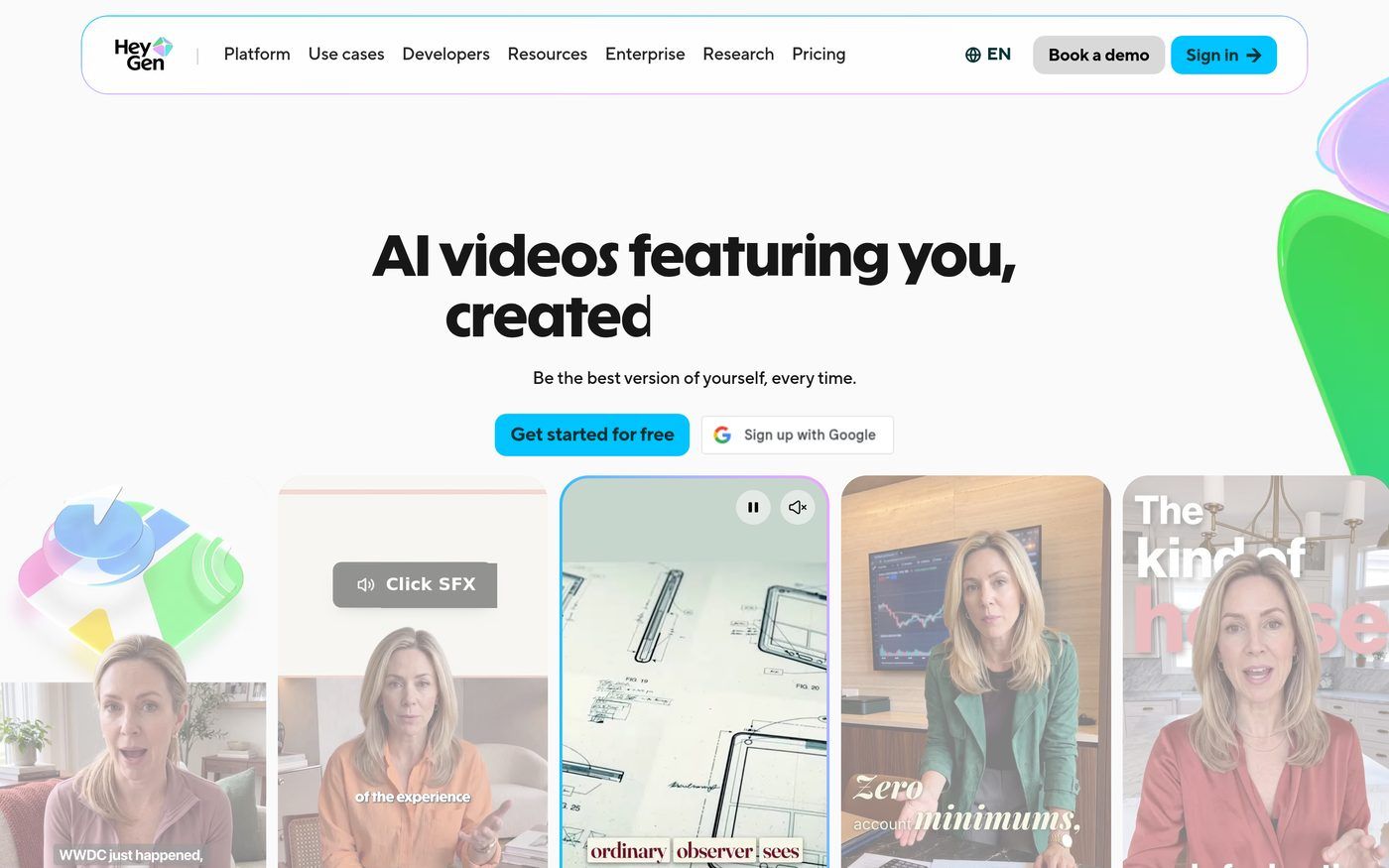
HeyGen is a strong match when a clinic wants a polished talking presenter for a website or an explainer, and it is comfortable starting from a photo avatar or a stock avatar. The official homepage presents HeyGen as a tool for AI videos that feature you, with a free starting plan and paid Creator tiers. That suits a new-client welcome that should look like a finished presenter video. It is a heavier tool than a simple Host composer if all you need is one photo and a short script, but it suits a finished presenter look.
Key Features
- Talking presenter videos from a photo avatar or a stock avatar
- A free plan, with paid Creator plans listed from $29 per month on the official pricing page
- A public flow aimed at professional explainers and presenter-led clips
- Multilingual video tools listed among official product options
Best For
- Clinics that want a polished presenter for a website welcome
- Teams that already like HeyGen's stock or photo avatar path
Pros of HeyGen
- The presenter look is a stated focus. Official pages are built around talking videos that feature a person on camera.
- A free plan is listed. You can try the flow before you look at paid Creator tiers.
- Paid pricing is published. Official pages list paid plans starting at $29 per month.
Cons of HeyGen
- The platform is broader than a single Host composer, so a short clinic intro can feel like more setup than you need
- A photo-plus-script flow is one path among several, not the only starting point
- A public G2 or Capterra rating was not available to list
Rating
Not listed.
Pricing
HeyGen has a free plan. Paid plans start at $29 per month on the Creator plan, with further paid tiers listed on the official pricing page. Confirm the current list there.
When to Use It
- You want a polished talking presenter for a clinic website or explainer
- You are comfortable starting from a photo avatar or a stock avatar in a larger platform
3. D-ID: Best for Photo-Based Clinic Explainers
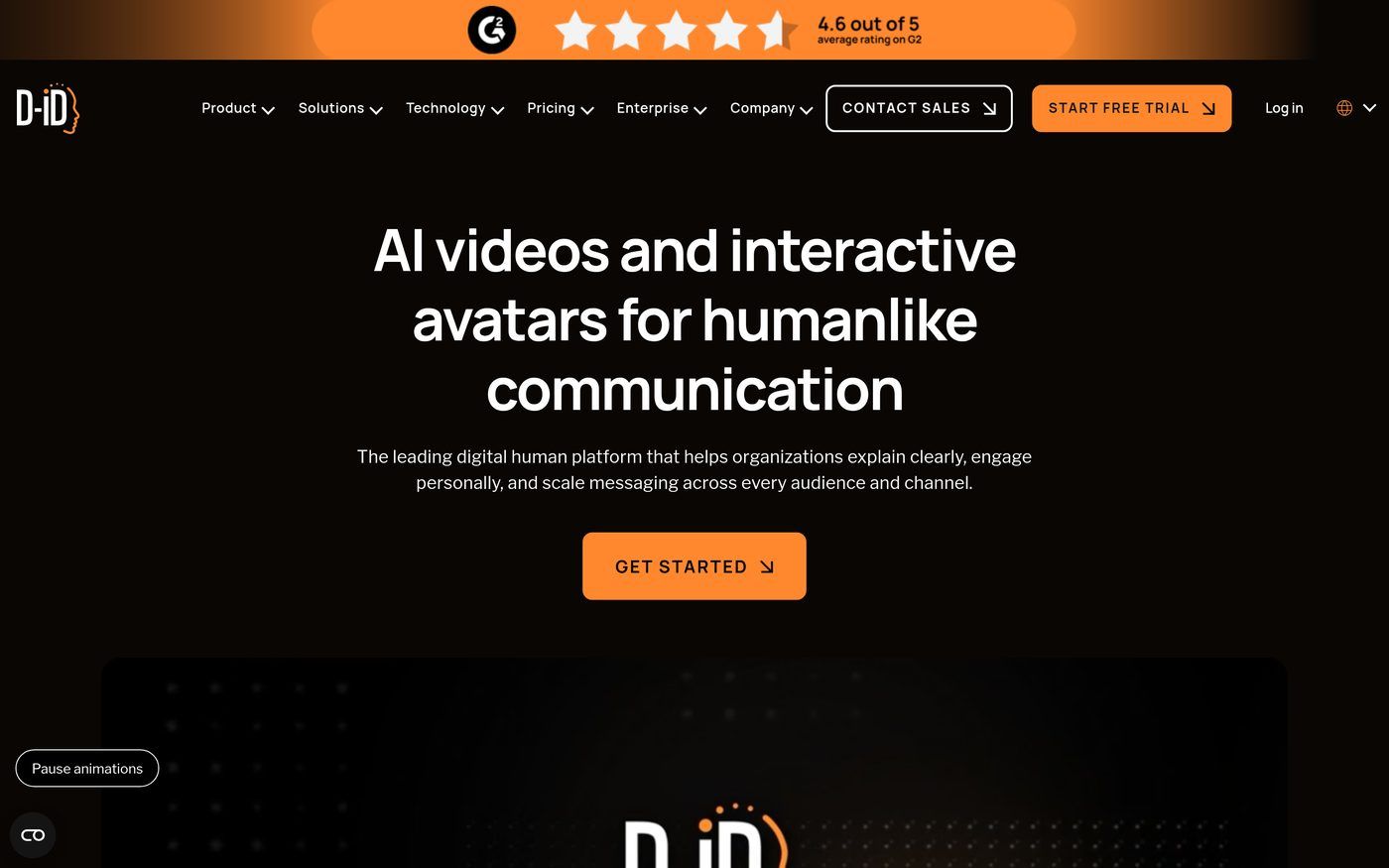
D-ID is a strong match when you want a still photo of the veterinarian to become a talking digital presenter. The official homepage describes D-ID as a platform for AI videos and interactive avatars that help organizations explain clearly. That maps well to a first-visit overview or a general pet care explainer, as long as the clinic reviews the script and the video is labeled as AI. D-ID's public pricing, when we checked, listed a trial and paid Lite plans billed annually, rather than an ongoing free plan.
Key Features
- Talking presenters from a still photo, with lip sync as a core part of the product
- A public focus on clear spoken explainers for organizations
- A 14-day trial, with paid Lite plans listed from $4.70 per month when billed annually
- Tools aimed at digital presenters rather than a large stock-only library
Best For
- Clinics that want a photo of the veterinarian to deliver a short explainer
- Teams that already think in terms of a digital presenter, not a stock actor
Pros of D-ID
- A photo can start the presenter. Official positioning is built around still images that talk.
- The product is aimed at clear explanation. That fits a first-visit overview or a general pet care clip.
- Paid pricing is published. Official pages list Lite plans from $4.70 per month when billed annually.
Cons of D-ID
- There was no ongoing free plan listed when we checked, only a trial and paid tiers
- The platform is built for digital presenters, which can feel heavier than a simple Host composer
- A public G2 or Capterra rating was not available to list
Rating
Not listed.
Pricing
D-ID lists a 14-day trial and paid Lite plans from $4.70 per month when billed annually, with further paid tiers on the official pricing page. We did not find an ongoing free plan on that page. Confirm the current list there.
When to Use It
- You have a photo of the veterinarian and a script or audio track for a short explainer
- You want a digital presenter path rather than a stock avatar library
4. Elai.io: Best for Learning-Style Pet Care Videos
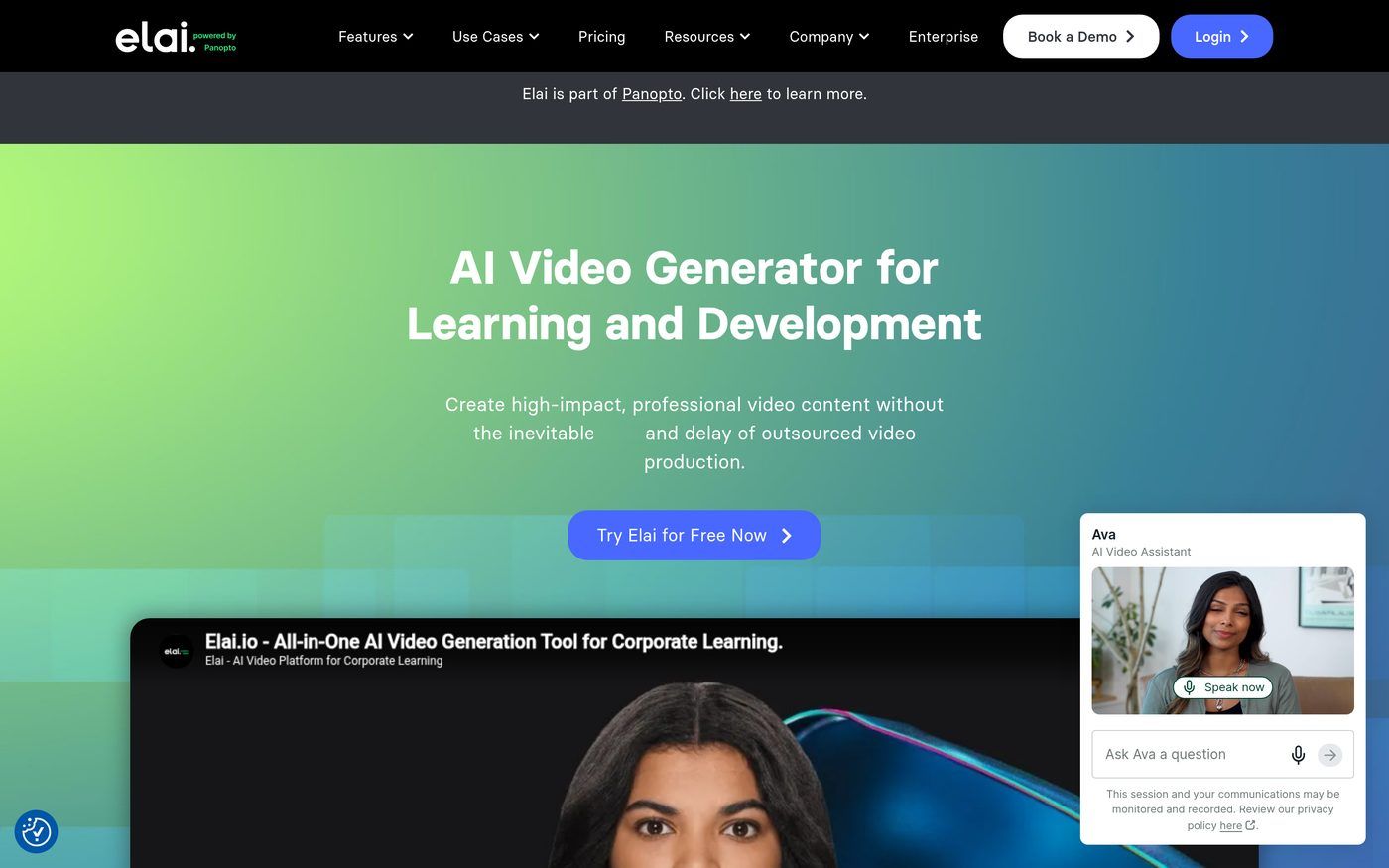
Elai.io is an AI video platform aimed at learning and development, with talking presenters that can start from a photo or a stock avatar. That can help a clinic that wants a structured pet care explainer in a training-style format, such as a general aftercare overview the clinic has already approved. It is a weaker fit if the whole point is a simple Host composer around one photo and a short welcome script. A free plan is listed, and paid plans start at $29 per month on the official pricing page.
Key Features
- Talking presenter videos aimed at learning and development
- A path that can start from a photo or a stock avatar
- A free plan, with paid Creator plans listed from $29 per month on the official pricing page
- A public flow built for educational and training-style clips
Best For
- Clinics that want a learning-style pet care explainer from a presenter
- Teams that already think in terms of training modules rather than a single welcome clip
Pros of Elai.io
- The product is aimed at learning videos. Official pages describe an AI video generator for learning and development.
- A free plan is listed. You can try the flow before you look at paid Creator tiers.
- Paid pricing is published. Official pages list paid plans starting at $29 per month.
Cons of Elai.io
- The public flow is built for learning and development, so a short clinic intro can feel like more setup than you need
- A simple Host composer around one photo is not the main framing on the official homepage
- A public G2 or Capterra rating was not available to list
Rating
Not listed.
Pricing
Elai.io has a free plan. Paid plans start at $29 per month on the Creator plan, with further paid tiers listed on the official pricing page. Confirm the current list there.
When to Use It
- You want a learning-style pet care explainer from a presenter
- You are comfortable working in a training-focused video tool rather than a single Host composer
How to Choose an AI Avatar Generator for Veterinarians
Start with the job the video has to do. If you want a clinic intro, a first-visit overview or a general pet care explainer spoken from one photo and a script the clinic can review, Zoice is the most direct path. If you want a polished presenter inside a larger avatar platform, HeyGen is the closer match. If the still photo should become a digital presenter, D-ID is the one to try. If the clip is a learning-style explainer and a training-focused tool is enough, Elai.io is the more natural fit.
Keep the use case narrow. These tools are for introductions and general pet care information, not for advice about a specific animal and not a substitute for the veterinarian's own guidance. Review every script as you would any public clinic video, and tell viewers that the presenter is an AI avatar.
FAQ
Can an avatar explain aftercare to pet owners?
You can make a general aftercare explainer from the vet's photo and a script the clinic reviews. In Zoice, you upload the photo, paste that script, and the Host is lip synced to those words. The clip is for general information only. It is not a substitute for the veterinarian's own advice, and it should not discuss a specific patient.
Can our clinic pet be a mascot?
Yes. A clear photo of the clinic pet can become a Host in Zoice, the same way a photo of the veterinarian can. That suits a lighter reminder or a welcome, with a script the clinic has approved. A sharp, well-lit face is easier for lip sync than a dark or distant shot.
Can it use the vet's own voice?
Yes, in Zoice you can clone a voice from a short sample, with permission, or import a reference audio file. That helps a clinic keep a familiar voice across a series of intros. Review the result before you publish, just as you would review the script.
Can I change the script after I generate the clip?
Yes. Change the script and generate again. That is the way to edit a clinic intro in Zoice: you revise the words, then create a new take from the same Host, rather than cutting the first clip on a timeline.